What exactly is wabi-sabi?
To understand its application in architecture, we must first unpack the term. Wabi refers to rustic elegance, simplicity, and the stillness that emanates from nature. Sabi, meanwhile, alludes to the passage of time, the beauty of natural ageing, and the story told by an object’s scars.
In the context of a home, this translates into spaces that do not seek the cold perfection of a catalogue, but the warmth of authenticity. It is not about neglect, but rather a deliberate omission of the superfluous.
Meeting points: the Mediterranean and Japan
Despite the geographical distance, vernacular Mediterranean architecture has always shared roots with wabi-sabi:
- Austerity: The use of thick walls and pure geometries.
- Materiality: The predominance of stone, lime, and wood.
- Light: The interplay of shadows that fosters introspection.
When we apply the wabi-sabi style to a Mediterranean villa, we enhance the emotional connection between inhabitant and environment, allowing the house to “age with dignity”.
Materials that tell a story
In a residential architectural project guided by wabi-sabi, the choice of materials is the most critical decision. We do not seek uniformity; we seek character.
Wood in Its Purest State
Let us forget perfectly laminated finishes. Wabi-sabi demands real wood. Oak, for example, is a material that matures exceptionally well. In our interventions, we often turn to local craftsmen who understand the behaviour of solid timber, allowing its knots and grain to dictate the personality of built-in furniture or structural elements.
A Return to Lime and Earth
Microcement has given way to more organic materials such as lime mortars. These finishes offer a vibrant texture that changes with the time of day and the angle of the light, creating a skin for the house that feels alive and natural.
A case study: the materialisation of calm in architecture
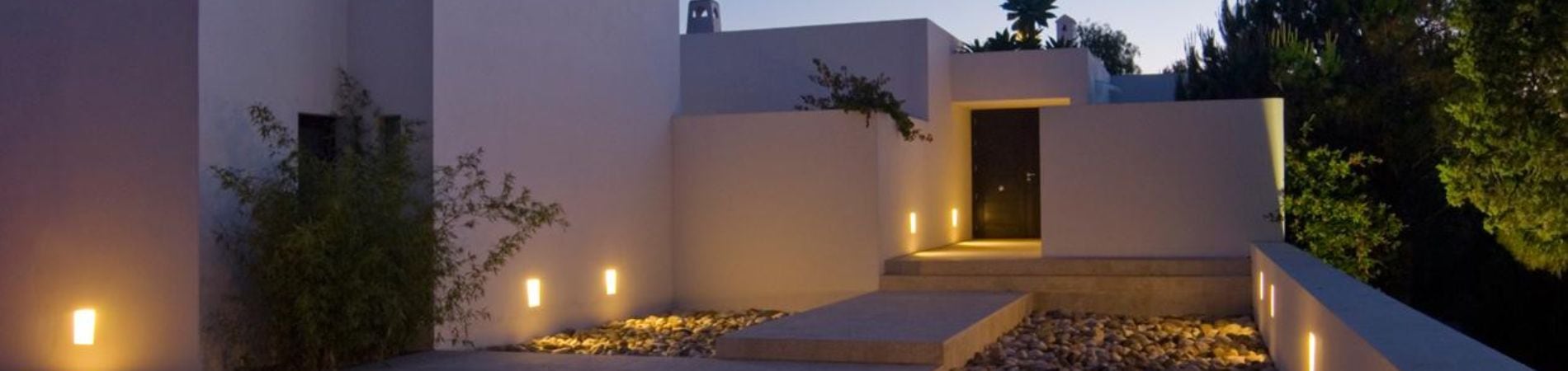
Within our trajectory at Alejandro Gimenez Arquitectos, there is a project that encapsulates this transition between East and West in a masterful way. We refer to Casa Hikari Project, a dwelling whose very name — meaning “light” in Japanese — already anticipates a clear architectural intention: the dominance of atmosphere over form.
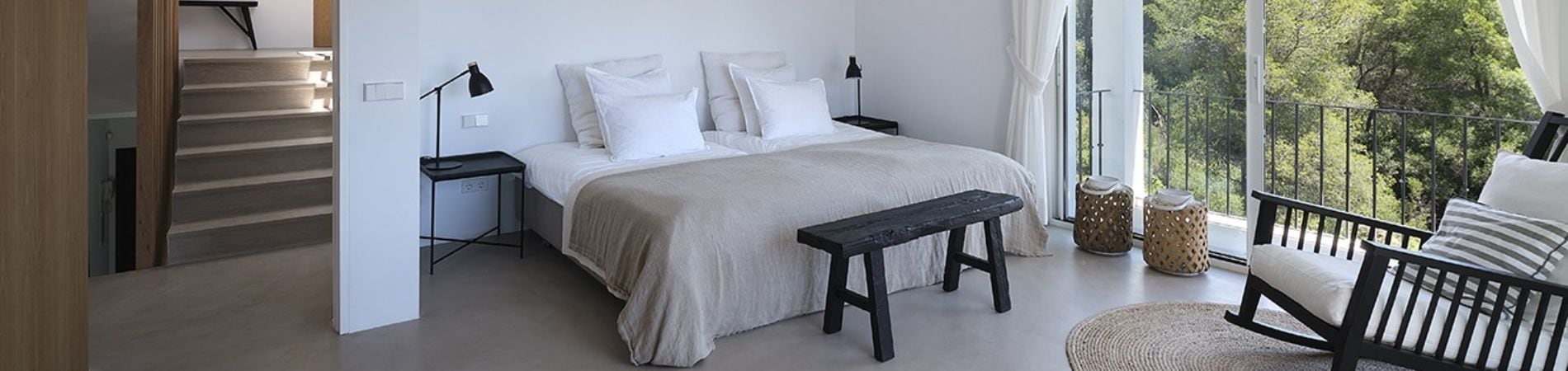
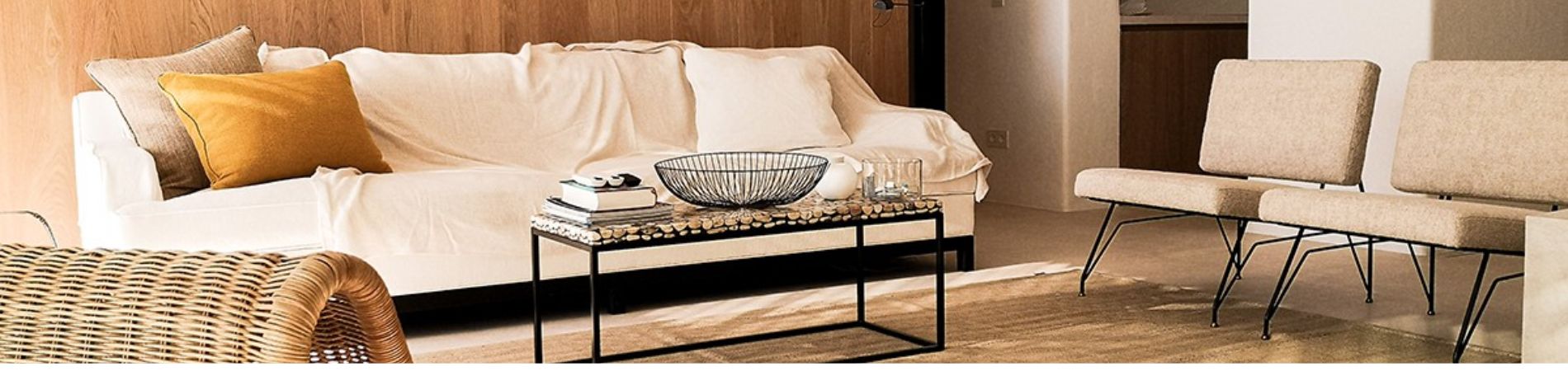
In this project, Eastern influence is not an aesthetic imitation, but a profound integration of values. Priority has been given to materials with an honest tactile and visual presence; solid oak, crafted with the delicacy of traditional local carpentry, coexists with white lime-rendered walls that act as canvases for the play of shadows.
One of the most significant details of this home is the inclusion of elements with memory. An example is the integrated sculpture created from antique wooden and metal sieves. This rescue of objects that have already fulfilled a life cycle is the ultimate expression of Sabi: finding beauty in the marks of time and in the history of materials that have served previous generations. The house does not feel like something “newly purchased”, but rather like a place with soul that seeks retreat and organic connection through its inner courtyard.
Light: the invisible material
In the wabi-sabi style, light is not a tool to eliminate darkness, but to celebrate it. Japanese architecture values the “praise of shadow”, and in the Mediterranean — where light can be blinding — learning to filter it is an art.
- Filtered light: Use of latticework or wooden slats to create rhythms of light and shadow.
- Strategic skylights: Introducing zenithal light to bathe a rough wall, accentuating its imperfections.
- Chiaroscuro: Creating dim corners that invite meditation and visual rest.
Landscape design and interior styling
A wabi-sabi home does not end at its walls. The garden must follow the same premise: a controlled nature that appears spontaneous.
- Native vegetation: Olive trees, lavender, and cypresses that require little maintenance and change with the seasons.
- Asymmetry: In interior styling, rigid compositions are avoided. A single handcrafted vase on a wooden table is enough to fill a space. Emptiness (the Japanese concept of Ma) is as important as the furnishings.
Sustainability and permanence
Wabi-sabi is, by definition, the most sustainable style that exists. By valuing what ages well, we eliminate the culture of disposability. A home designed under these principles will not go out of fashion in five years because it does not follow commercial dictates. It is built to last, to be repaired, and to be loved more as time passes.
By using local construction techniques and nearby materials, we reduce the carbon footprint and support the artisanal economy — something fundamental to our studio’s philosophy.
The luxury of the essential
Mediterranean residential architecture is experiencing a renaissance towards the human. The wabi-sabi style teaches us that we do not need perfect houses, but houses that understand us. Spaces where a crack in the stone or wood worn by the sun are reminders that life is change, and that there is immense peace in accepting that reality.
Creating a home under these principles is an investment in wellbeing. It is about designing a refuge that, like Casa Hikari, allows us to disconnect from external noise in order to reconnect with our own nature.