The noise you can’t see, but that drains you
There is a kind of tiredness that has no precise name. It is not the physical tiredness of someone who has run, nor the intellectual fatigue of someone who has thought too much. It is the accumulated exhaustion of living in a sound environment that never rests. Studies on wellbeing and the built environment have spent decades documenting the relationship between chronic exposure to noise and increased cortisol, that stress hormone which works in silence — with a certain irony — to erode sleep quality, concentration and mood.
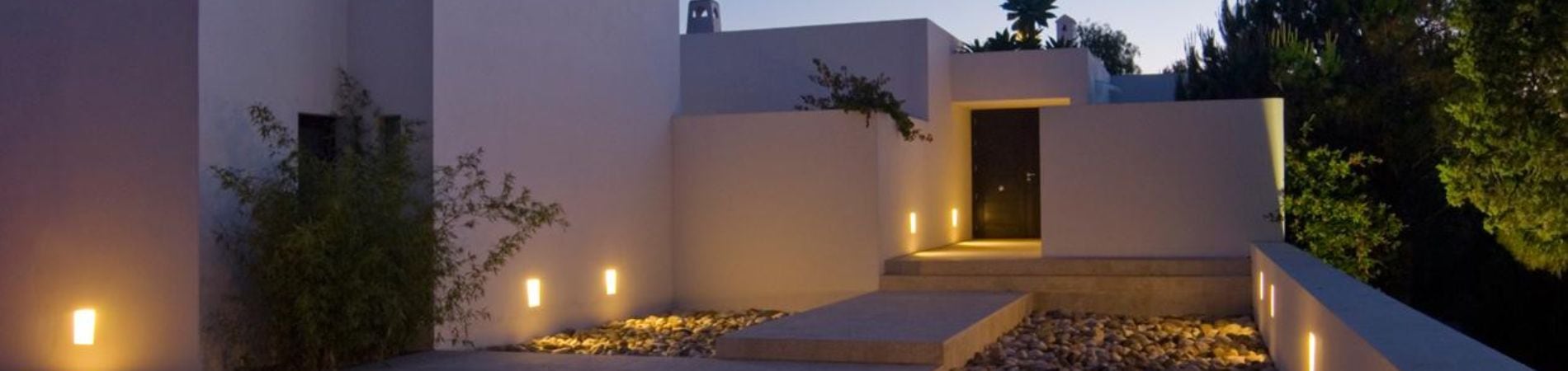
A villa in Marbella, in Benahavís or in Estepona should be the architectural answer to that exhaustion. But not all of them are. Many luxury properties on the Costa del Sol have been designed to impress visually, prioritising large expanses of glass and hard finishes that, acoustically, turn the interior into a resonant box. Sound bounces, amplifies, and the peace the photograph promised dissolves on the first day of Levante wind.
Architectural acoustics in villas: When material builds silence
At Alejandro Giménez, Marbella architects, we understand silence for what it truly is: a building material. One that does not appear in the construction budget as a separate line item, but is present in every design decision.
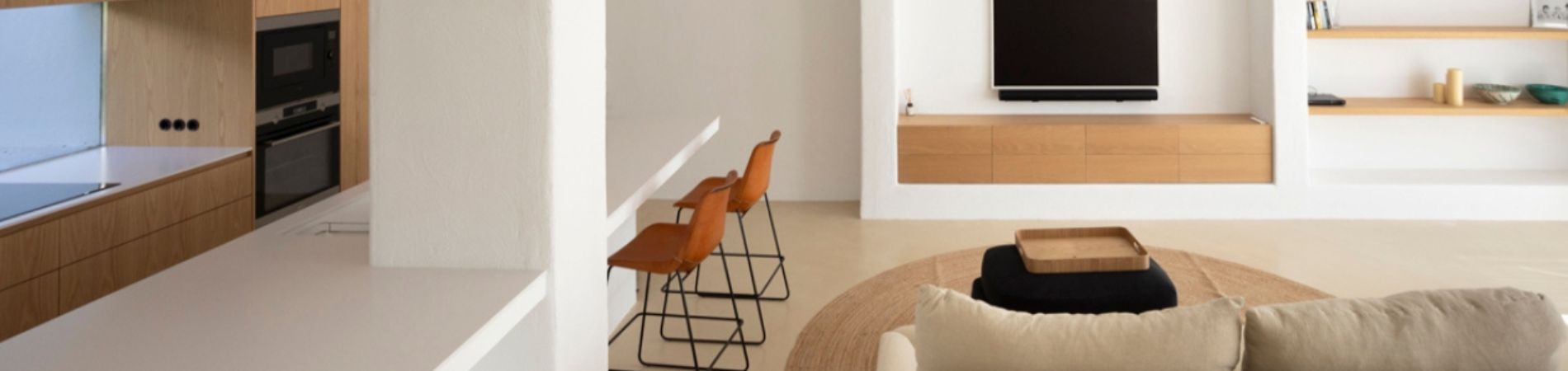
Choosing a lime mortar instead of a synthetic coating is not only aesthetic. Lime is a porous, living material that breathes and absorbs. Its micro-irregularities on the surface disperse sound waves rather than reflecting them, contributing to that sense of calm you feel in a whitewashed room — and that is so difficult to explain rationally. Wood works in a similar way: its natural fibres dampen, soften, round out sound until it becomes something tolerable, almost warm.
By contrast, glass and bare concrete — the protagonists of a certain aggressively minimalist aesthetic — create acoustically hostile environments. Perfectly smooth, hard surfaces that return sound unfiltered, without mercy. A polished concrete kitchen can be beautiful. But eating in it with three simultaneous conversations can be exhausting.
The use of natural textiles — linens, wools, cottons in upholstery, fibre rugs — is not a decorative whim: it is applied acoustics. Every soft surface you introduce into a space is a decision for sonic wellbeing.
The paradox of open space and acoustic intimacy
One of the most interesting challenges in designing luxury villas in the Mediterranean environment is the tension between openness and privacy. The architecture we practise seeks to dissolve the boundary between inside and outside: patios that breathe, living rooms that open onto the garden, bedrooms that dialogue with the landscape. But that openness, if poorly resolved, can be an acoustic trap.
The key lies in geometry and stratification. A well-proportioned patio does not amplify: it channels. A double-height space with absorbent materials around its upper perimeter can be acoustically quieter than a conventional room. The positioning of bedrooms in relation to leisure and service areas is not only a matter of visual privacy: it is acoustic design in plan. We think about noise before it exists, when it is still only a line on the drawing.
In developments such as La Zagaleta, El Madroñal or Los Flamingos, where Mediterranean topography gives us level changes and dense vegetation, architecture can use the land as an acoustic ally. A home well set into its hillside is, by nature, quieter. The landscape works in your favour before construction even begins.
What your nervous system feels when you arrive home
There is an experience that those who live in a house resolved well acoustically always describe in the same way: they enter and something loosens. A tension they did not even know they were carrying simply dissolves. It is not magic. It is physiology.
The nervous system responds to the sound environment immediately and autonomously. A space with good acoustic comfort — without echoes, without excessive reverberation, with a low background noise level — activates the parasympathetic system, that state of deep calm that allows you to truly rest, to converse without effort, to sleep without interruptions. In a family, that translates into fewer conflicts, more presence, the real possibility of enjoying the home you have built.
The white that characterises so many of our works is not only a chromatic choice. It is the visual expression of a philosophy: refinement. Eliminating the inessential so that the essential can breathe. Applied to sound, that same philosophy produces spaces where noise has also been refined, filtered, contained. Where what you hear, if you hear anything, is the wind among the pines, the water of a fountain, the conversation you have chosen to have.
Building the silence you deserve
If you are planning a villa on the Costa del Sol — or renovating the one you already have — we invite you to think of acoustics not as a technical specification but as an intention for living. At Alejandro Giménez Architects we integrate sonic comfort from the very first design decisions, because we know that a home that gives you silence is giving you something that money alone cannot buy: quality time within your own walls.
Contact us and tell us how you want to feel in your home. The rest, we build together.